There have always been moments when a young person stands at the edge of themselves, confronting who they have been and who they are asked to become. Across cultures and centuries, this transition is never left to chance as societies have carved out paths for this process of becoming. Rites of passage are deliberate, communal, spiritually anchored processes that carry youth from individual identity into collective responsibility.
It would be reductive to think of a rite of passage as just ritual, when in fact it is a reorientation of the self. It tells a young person, “You belong to a people, and belonging requires contribution.” In many traditions, one becomes “adult” not by age but by demonstrating the courage, discipline, and integrity required to be entrusted with the well-being of others. These rites mark the moment when a young person becomes accountable not only to themselves, but to the community that shaped them.
In the modern world, many of these structured pathways have been disrupted. The legacies of harm and systemic violence have worked to break the vessels that once held our children. Yet the human need for transition, for recognition, for guided becoming, has not disappeared. It found new expressions in the spaces where young people gather: the fields, the courts, the street corners and open lots where character is built and becoming can be found.
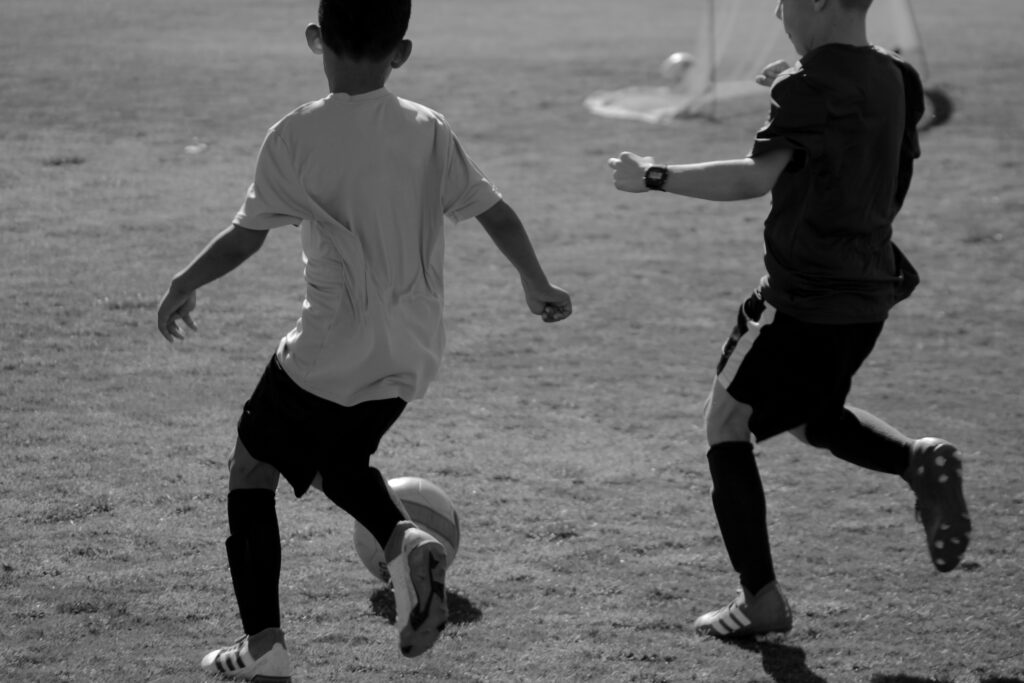
Sports have become one of the few surviving rites of passage, especially for boys. Not because girls do not play or excel, but because, culturally, boys are often offered sports as one of the primary arenas where they are allowed to feel, strive, fail, lead, and cry. To test and be tested. Society has long treated boys’ participation in sports as a proving ground, and sometimes it is healthy, sometimes it is harmful. For girls, sports can and often do serve as empowerment, access, and self-definition, but for boys, sports are often positioned as a declaration saying, “This is how you learn to be a man. This is where you are shaped.” We do not romanticize that fact. We simply recognize its power, because whatever carries cultural weight can also carry transformative potential. Sports can teach a young boy how to inhabit his body without weaponizing it. How to take instruction without collapsing into shame. How to manage frustration without succumbing to violence. How to collaborate, how to be held accountable, how to confront both triumph and defeat without losing the core of himself. These are not small lessons. These are life-saving lessons. In a world that often denies boys emotional literacy, team sports become a rare space where discipline, vulnerability, and collective purpose can coexist. And when done intentionally, the field becomes more than turf; it becomes a threshold.
This dynamic also reveals a deeper truth about patriarchy. While it privileges men structurally, it simultaneously harms boys and men psychologically by restricting the full breadth of their emotional lives. Boys learn early that tenderness, sadness, fear, and dependence can invite ridicule, policing, or even violence from both men and women. And so, they are funneled into narrow emotional scripts that reward dominance and punish vulnerability. Within this context, sports often become one of the only socially sanctioned spaces where boys and men can express a wider spectrum of emotion without retribution. A player can weep after a loss, embrace a teammate in exhilaration, tremble with nerves before a penalty kick, or erupt in joyous celebration, and no one calls his humanity into question. This emotional permission extends beyond the field. Male spectators also find a rare portal in sports through which to feel. For many men, watching a match becomes the only context where they can cry openly, shout, grieve, hope, and experience collective disappointment or collective triumph without being shamed. In this way, sports serve both players and fans as a temporary suspension of patriarchal emotional repression. This becomes a fleeting but powerful reminder that boys and men, too, are aching for fuller ways of being human.
Yet it is also necessary to name that sports are not a flawless system. They are not insulated from the world; they are shaped by it. Athletic spaces exist within the same global culture of patriarchy, machismo, and hypermasculinity that marks nearly every institution. As a result, the emotional range that sports make possible for boys and men is still constrained by the terms of the very system they are momentarily stepping outside of. A player may cry after a loss, but that may only be acceptable if he has built up enough social cachet by being perceived as “strong enough” or “tough enough” to be afforded that vulnerability. A fan may weep in the stands, but that display of emotion may be more accepted if it is culturally coded and anchored to victory. Or after a loss that has been deemed respectable enough. In other words, the emotional aperture sports provide is real, but it is partial. It is still shaped by the rules of manhood that society has handed down.
For this reason, instances of harmful behavior in sports (misogyny, violence, hazing, homophobia, exploitation) should not be read as evidence that sports themselves are inherently flawed. Rather, they reflect the cultures in which they are embedded. Sports, like any tool, become a mirror: They amplify what a society already believes about power, gender, and worth. A team or arena steeped in patriarchal norms will reproduce those norms. A team grounded in accountability, mutual respect, and emotional literacy is more likely to cultivate those qualities in the young people who move through it. Sports do not operate outside of culture; they refract it. And because of that, transforming sports culture becomes one way of transforming the social conditions that surround boys and men.
What makes sports valuable for violence prevention, then, is not that they are perfect or pure, but that they offer an opening and a structured environment where boys and men can practice emotional expression, interdependence, cooperation, and accountability in ways that other parts of society often restrict. The imperfections do not diminish this opportunity; they simply clarify how much intentionality is required to ensure that sports function as a pathway toward healthier masculinities rather than a reinforcement of harmful ones.
It’s from this understanding that the New Jersey Coalition Against Sexual Assault’s (NJCASA) community-level prevention project began to ask, what if we treated our fields and clubhouses as intentional sites of becoming? What if sports were not merely recreational, but deliberately structured rites of passage? What if we treated sports as frameworks capable of cultivating emotional regulation, collective responsibility, and social resilience? Increasingly, international research suggests that when sports are used with intention, they function as protective environments that help young people resist recruitment into violence, strengthen cross-community trust, and develop pro-social identities (UNDP, 2020; UNODC, Technical Guide, 2020).
This is more than a theory as sports are already reshaping communities. In northern Nigeria (particularly across Borno, Yobe, and Kaduna states), local organizations confronted the long shadow of violent recruitment not with surveillance or punitive measures, but with structure, discipline, and belonging. Between 2015 and 2021, civil society groups partnered with the United Nations Development Programme (UNDP), Mercy Corps, and regional peacebuilding networks to implement community football leagues designed as alternative rites of passage for boys whose lives had been marked by displacement, poverty, and targeted manipulation by armed groups. These initiatives reimagined sport as a psychosocial and developmental intervention. Rather than attempting to “lecture” youth out of radicalization, which is widely shown to be an ineffective approach (UNDP, Journey to Extremism, 2020), organizers embedded the transformative elements of a rite of passage directly into the rhythm of athletic life. Weekly practices became sites of mentorship, emotional regulation, and skill-building. Matches functioned as rituals of cooperation where youth practiced discipline, teamwork, and mutual accountability. And team huddles offered structured opportunities to process frustration, anger, disappointment, and aspiration, which are key emotional competencies linked to reduced violence involvement (Mercy Corps, 2019 UNODC, 2020).
Across nearly 30 communities, more than 5,400 young people participated in these leagues (UNDP Nigeria, 2020). Evaluations found significant change:
- A 27% decrease in youth engagement in high-risk behaviors after one season (Mercy Corps, 2021).
- A 31% increase in cross-religious trust between Muslim and Christian youth, which is an essential protective factor against polarization and recruitment (UNDP Representation Office to the European Union, 2022).
- Increased school attendance and educational engagement among participating boys (Mercy Corps, 2019).
- A documented reduction in susceptibility to extremist narratives in neighborhoods with active football programs (UNDP Nigeria, 2020).
Many of the coaches who received training in conflict de-escalation, trauma-informed communication, and community-based protection described the football pitch as a “microcosm of the society we want,” and a space where “anger has channels, leadership is modeled, and no one wins alone.” Yet the most profound outcome was not numerical, but psychological and communal. Participants repeatedly described the program as a pathway, i.e. a structured crossing into a more grounded, responsible sense of self. Many boys reported that it was the first time they had ever experienced a guided developmental process that taught them how to manage power, how to be held accountable by peers, how to contribute to a team, and how to imagine a future beyond survival. For a generation of youth shaped by instability and loss, football became a restored rite of passage that affirmed their worth and connected them back to community. These results prompted a crucial question for NJCASA: What might a Nigerian-style football rite of passage look like in New Jersey? New Jersey’s communities are already bustling with young people who are restless and eager for guidance and who have limitless potential. The fields and mentors are here. What is often missing is not capacity but intentionality. With deliberate design, our local sports spaces can become far more than athletic venues. They can become structured environments that teach the next generation how to step into adulthood with steadiness, courage, and dignity.
To the coaches, educators, after-school staff, community organizers, faith leaders, and neighborhood elders who already shoulder this responsibility: You are the stewards and practitioners of one of humanity’s oldest traditions, i.e. shepherding from raw potential into relational power. You may not call this work “violence prevention,” but research affirms that every moment you model emotional discipline, fairness, and accountability, you are constructing the conditions where harm loses its hold, resilience can root itself deeply, and we get one step closer to building a safer world (UNAOC, 2022; UNESCO, 2024; UNODC, 2020). If you have ever wondered how to turn your team, field, or program into a structured pathway of protection and transformation, know this: The groundwork already exists. The evidence is clear. The communities are ready. This is an invitation to reclaim the rite of passage as a tool for safety, a tool for belonging, a tool for liberation.
The World Cup offers New Jersey a moment of extraordinary visibility and influence, where public emotion, civic pride, and global attention converge. Large-scale sporting events consistently reshape community behavior, sometimes in ways that increase harm but also in ways that can strengthen safety when proactive measures are in place. International evaluations show that well-designed public campaigns deployed during major tournaments can reduce harassment in transit hubs by up to 20%, increase bystander intervention rates by as much as 30%, and significantly expand community awareness of available support services (Transport for London, 2014; UN Women, 2023). These are not abstract gains; they are measurable improvements in public safety and community readiness.
The urgency is real. Host cities for previous tournaments (including London, Johannesburg, Rio, and Doha) documented spikes in sexual harassment, domestic violence, and alcohol-related harm during the weeks of competition (CPS, 2022; Women’s Aid, 2024). Yet those same cities also demonstrated that early, coordinated prevention strategies, like public messaging, youth engagement, ambassador programs, trained bystanders, and crisis response overlays, can mitigate risk and strengthen community cohesion.
New Jersey has an opportunity to apply these lessons with intention. Coaches, mentors, and youth leaders can take on roles that reach far beyond technical instruction. They can help translate the emotional intensity of the tournament, its joy, heartbreak, suspense, and collective exhilaration, into structured opportunities for boys and young men to practice accountability, emotional regulation, respect, and community responsibility. This mirrors the most effective global prevention models, where sports become scaffolding for identity formation and social learning.
Preparation matters. When communities establish prevention protocols before a major event, research shows increases in help-seeking, improvements in public perceptions of safety, and higher reporting rates from survivors who feel more resourced and less isolated (UNODC, 2020). Aligning partners such as youth programs, sports leagues, schools, bar and venue associations, transit authorities, and cultural organizations can create the ecosystem required to keep people safe when crowds swell and emotions run high.
Should New Jersey invest deeply in this moment, it can step into the tournament as more than a geographic host. It can model what a community looks like when it treats a global spectacle as an opening for collective care. Where youth ambassadors carry messages of respect into the heart of celebration. Where coaches guide emotional development alongside athletic skill. Where agencies and community groups collaborate seamlessly. And where prevention is visible, present, and lived.
Rites of passage often emerge in moments of disruption, i.e. times when emotion runs high, when the ordinary is suspended, when young people find themselves standing in the presence of something larger than their daily lives. The World Cup will create exactly that terrain. A ball rolls across a field, tens of thousands erupt in sound, and a young man feels the weight of expectation, possibility, and identity all at once. These are the moments when new selves can be shaped.
The World Cup is approaching. Its energy is already gathering. Within that rising tide sits a rare chance to influence who our young people become and who we become as a community. This is the work before us. This is the invitation. This is the moment to build safety into the atmosphere itself, long before the first whistle sounds.
Works Cited
Crown Prosecution Service (CPS). “World Cup: There Is No Excuse for Domestic Abuse.” 21 Nov. 2022.
https://www.cps.gov.uk/cps/news/world-cup-there-no-excuse-domestic-abuse
Liao, Mary, et al. Tackling Violence Against Women and Girls in Sport: A Handbook for Policy Makers and Sports Practitioners. UNESCO and UN Women, 2023.
https://www.unwomen.org/en/digital-library/publications/2023/07/tackling-violence-against-women-and-girls-in-sport-a-handbook-for-policy-makers-and-sports-practitioners
Mercy Corps. Does Peacebuilding Work in the Midst of Conflict? Evidence From Nigeria. Mercy Corps Nigeria, 2019.
https://www.mercycorps.org/sites/default/files/2020-01/PRG_NigeriaImpactEvaluation_R_lo_FINv3_Web.pdf
Transport for London (TfL). Safety and Security Annual Report 2013/14. Transport for London, 2014.
https://content.tfl.gov.uk/safety-and-security-annual-report-2013-14.pdf
UNAOC (United Nations Alliance of Civilizations). The Contribution of Sport to the Youth, Peace and Security Agenda. UNAOC, 2022.
https://www.unaoc.org/resource/thematic-paper-the-contribution-of-sport-to-the-youth-peace-and-security-agenda/
UNDP (United Nations Development Programme). Journey to Extremism in Africa: Pathways to Recruitment and Disengagement. UNDP Regional Bureau for Africa, 2020.
https://journey-to-extremism.undp.org
UNDP Nigeria. “Sports, Social Cohesion and Sustainable Peace.” United Nations Development Programme Nigeria, 2021.
https://www.undp.org/nigeria/news/sports-social-cohesion-and-sustainable-peace
UNDP Representation Office to the European Union. “In Nigeria, Sports Builds Bridges Towards Peace and Inclusion.” United Nations Development Programme, 6 Apr. 2022.
https://www.undp.org/european-union/stories/nigeria-sports-builds-bridges-towards-peace-and-inclusion
UNESCO. “Towards a Safer Playing Field: Tackling Violence against Women and Girls in Sport.” UNESCO News, 24 Apr. 2024.
https://www.unesco.org/en/articles/towards-safer-playing-field-tackling-violence-against-women-and-girls-sport
United Nations Office on Drugs and Crime. Preventing Violent Extremism Through Sport: Technical Guide. UNODC, 2020.
https://www.unodc.org/documents/dohadeclaration/Sports/PVE/PVE_TechnicalGuide_EN.pdf
United Nations Office on Drugs and Crime. Preventing Violent Extremism Through Sport: Practical Guide for Practitioners. UNODC, 2020.
https://www.unodc.org/documents/dohadeclaration/Sports/PVE/PVE_PracticalGuide_EN.pdf
Women’s Aid. “Women’s Aid Launches ‘No More Years of Hurt’ Campaign Highlighting the Spike in Domestic Abuse During Big Football Games.” Women’s Aid, 20 June 2024.
https://womensaid.org.uk/womens-aid-launches-no-more-years-of-hurt-campaign-highlighting-the-spike-in-domestic-abuse-during-big-football-games/