In Uganda, community activists have spent years engaging neighbors, faith leaders, health workers, and local officials in conversations about violence and power. In Iceland, policymakers and educators have attempted to confront gender inequality through law, schools, and public life while continuing to grapple with persistent sexual and gender-based violence. In Aotearoa New Zealand, Māori communities have developed prevention approaches that place cultural knowledge and collective responsibility at the center of their work. These efforts emerge from different histories and political realities, yet each is animated by a similar question: What conditions make violence easier to prevent long before it occurs?
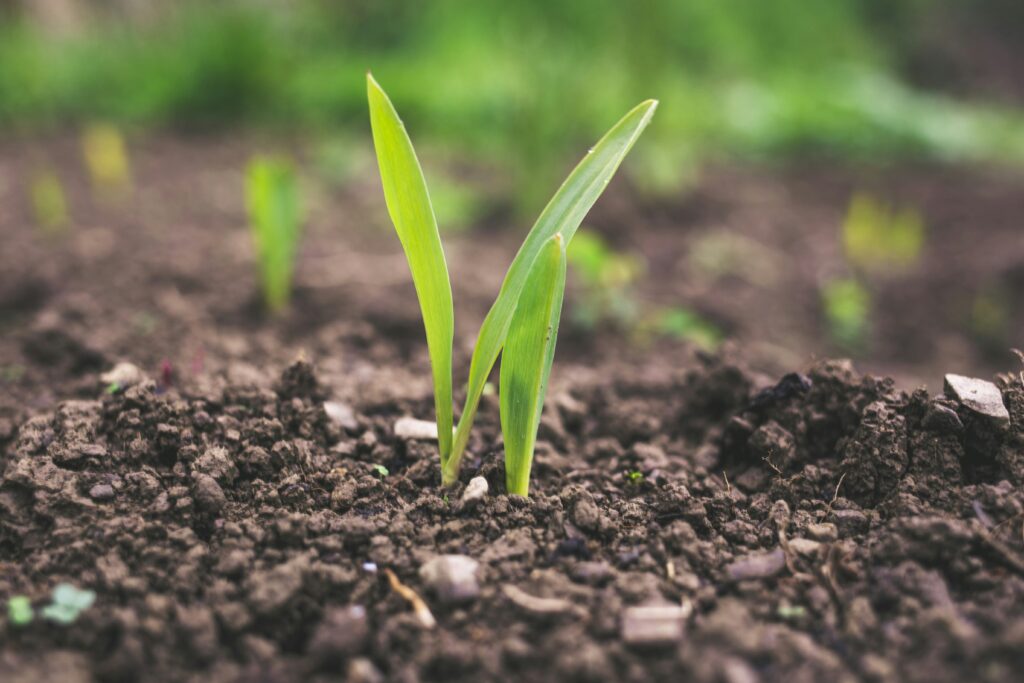
Gardeners know that removing weeds and cultivating a healthy garden are not quite the same thing. A patch of earth may be cleared of invasive growth and still struggle to produce anything of substance. The visible problem has been addressed, but the soil itself may remain depleted from years of neglect, erosion, or overuse. In those circumstances, the gardener can find themselves fighting the same battle season after season. The weeds are removed, yet the conditions that allowed them to flourish remain largely unchanged. Getting rid of the weeds does not automatically restore what the soil needs to sustain life.
The metaphor should not be asked to carry too much. Human beings are not plants, and violence does not grow according to the predictable logic of a garden, nor is violence a weed with a single root that can be located and pulled cleanly from the ground. Even so, the distinction is useful for the fact that it challenges the illusion that visible disorder is the problem in its entirety. Sexual violence prevention often requires attention to two different but related tasks. One involves responding to harmful behavior once it appears. The other requires examining the social fertilizers that create an environment that propagates harm. The first task is often more visible and easily understood. The second is more insidious and frequently mistaken for something other than prevention. Yet it is often here that the deeper conditions of violence are found.
Sexual violence prevention workers know this tension well. The brilliant folks on the frontlines do not lack an understanding of primary prevention and have long insisted that prevention means attending to the conditions that precede violation, with emphasis on the conditions that make some forms of harm easier to excuse, conceal, or misunderstand. Yet the world in which prevention work happens often rewards a narrower kind of attention. Crisis has a way of summoning language, funding, urgency, and institutional courage that quieter forms of cultivation rarely receive. Patterns of abuse may be whispered about for years before they become publicly undeniable, when some event forces a community to speak. While that speech may be necessary and even lifesaving, it is also shaped by lateness. By the time a community has galvanized, much harm has already occurred.
The difficulty is that institutions often become fluent in response while remaining far less practiced in the slower disciplines of prevention. They can name what must happen after harm has occurred, while still struggling to examine what they have made ordinary before harm is recognized as harm. This is where the garden metaphor becomes more demanding. Soil work is not dramatic. It requires attention to what is quiet, cumulative, and easy to mistake for the natural order of things. In prevention, this means asking how people are taught to read authority, gender, desire, refusal, dependency, care, silence, obligation, etc. These teachings do not always arrive as doctrine. Instead, they are often carried in tone and policy, or in who is believed quickly and who is asked to be patient, or in which children are described as vulnerable and which are described as grown, or in which families are protected from shame and which are exposed to surveillance.
Young people receive a lot from this messaging, and they learn from contradiction as much as instruction. A curriculum on consent enters young lives that are already crowded with evidence about whose boundaries produce consequences, whose discomfort is treated as valid, whose desire is imagined as harmless, and whose body is made available for public judgment. Young people notice when rules are enforced rigorously and when they become negotiable. They notice which harms generate concern versus those that are quietly accommodated. Therefore, prevention cannot afford to pretend that a lesson begins with a lesson plan, because too much of what young people learn arises from how they interpret the accumulation of messages transmitted through their culture.
Culture, in this sense, is not limited to tradition or way of life. It includes the less visible agreements that govern everyday life, such as what is considered normal or inevitable and what is permitted to remain unquestioned. These agreements are rarely unanimous or monolithic. They are contested, negotiated, resisted, and reproduced simultaneously. Yet they help establish the social environment within which people make sense of themselves and one another. For those working in prevention, this presents a practical challenge. If violence is understood solely through individual actions, many of the conditions that shape those actions remain difficult to see. If attention expands to include the social environment in which people learn, relate, and exercise power, a different set of questions becomes possible.
One example comes from Uganda, where the organization Raising Voices developed SASA!, a community mobilization approach designed to address violence against women and HIV by examining how power operates in everyday life. Rather than relying primarily on classroom instruction or mass media campaigns, SASA! works through existing social relationships. Community members are trained as activists and engage neighbors, friends, families, faith leaders, health workers, and local officials in conversations about authority, relationships, decision-making, and violence. The premise is not especially novel. People tend to understand their lives through the social worlds they inhabit. If those worlds remain unchanged, information alone often struggles to gain traction.
What distinguishes SASA! is its willingness to engage proactively. SASA! does not treat culture as an atmosphere hovering above people’s lives. Instead, culture is treated as something made and remade in conversation, habit, neighborly judgment, and the small negotiations through which people come to understand what power entitles them to do. For instance, when a neighbor challenges a comment made about a wife’s obedience or a faith leader speaks differently about authority in the home or a health worker responds more compassionately to a disclosure of violence or a group of men reconsiders assumptions that previously passed without discussion, these were viewed not as peripheral activities surrounding prevention, but as the heart of prevention itself.
When researchers evaluated SASA! through a cluster randomized controlled trial in Kampala, they found evidence of shifts in how violence was understood within participating communities. Women were less likely to view men’s violence against partners as justified, men expressed greater support for a woman’s right to refuse sex, and women reported lower levels of past-year physical intimate partner violence than those living in comparison communities. The findings did not suggest that deeply rooted social norms had disappeared. The study itself cautions against such certainty. Human relationships rarely lend themselves to that kind of neat accounting. The findings from SASA! invite a hopeful possibility. They suggest that the assumptions that are often treated as fixed are in fact (under particular conditions) more open to challenge than they first appear. Yet the movement from social change to the prevention of violence is rarely straightforward. Which is where the example of Iceland offers an opportunity to linger with that difficulty rather than rush past it.
Iceland is often described through the language of gender equality, a term that can feel insufficient in anti-violence and racial justice work when it is used to imply sameness rather than repair. Equity asks us to consider what different people require because the ground beneath them has not been made even. Still, Iceland’s use of equality should not be dismissed too quickly. What makes this example useful is that equality is not merely a promise of identical treatment; it becomes an effort to interrupt the ways gender is taught, rehearsed, and rewarded/punished across ordinary life. The country has spent decades making gender equality part of its public architecture, through law, education, policy, and national identity. For example, its Equal Status and Equal Rights Act seeks to prevent gender discrimination and maintain equal rights and opportunities across society. And its equal pay certification system requires organizations of a certain size to prove compliance with equal pay standards rather than simply affirming them in principle. While these are meaningful interventions into public life, none of this is said to negate the reality that Iceland continues to contend with sexual and gender-based violence. In 2024, United Nations Human Rights Committee experts commended Iceland’s progress on gender equality while raising concerns about domestic and gender-based violence.
The value of Iceland is that it shows that a society can be particularly serious about gender equality and still find that violence persists in the intimate and institutional spaces where formal progress moves unevenly. None of these efforts (e.g., laws altering public obligations or schools revising curricula or employers being required to account for pay practices) should be minimized. However, we need to recognize and strategize around the fact that these efforts do not guarantee that people will immediately relinquish the private permissions they have inherited, especially in the very many insidious and obvious instances where dominance has been mistaken for normalcy. Or where silence has protected family or institutional reputation, or where consent is still negotiated under the pressure of status, fear, and desire for belonging.
This is why Iceland’s educational work deserves attention alongside its policy commitments. Reykjavík’s Week 6 materials for adolescents address consent, sexual violence, pornography, gender roles, relationships, and the ways language and minor behaviors can prepare the ground for more serious violations. The Hjalli Model, developed in Icelandic early childhood education, takes a different route by trying to interrupt gendered socialization before adolescence. Its compensatory pedagogy begins from the premise that boys and girls are not encouraged toward the same capacities from birth. So, in response, the program deliberately supports girls toward assertiveness, independence, and adventurousness, while boys are deliberately supported toward empathy, cooperation, and care. The model’s sex-segregated structure is not beyond critique, particularly for those of us attentive to gender expansiveness and the dangers of hardening the very categories one hopes to loosen. Still, it is significant that the model does not assume children can be freed from gendered expectation by being treated as though those expectations have not already touched them. The value of Hjalli, however, does not depend upon accepting the model in its entirety. It offers evidence that Iceland’s approach to prevention has, for decades, treated gender formation as a subject worthy of attention long before young people encounter formal conversations about consent or violence. Whether one agrees with Hjalli’s methods or not, the model reflects a broader recognition that pervasive social norms and assumptions are not suddenly acquired in adolescence. They are learned gradually through childhood and often become so familiar that they are mistaken for personality rather than socialization. In this respect, Hjalli is perhaps most useful as an illustration of the seriousness with which Iceland has approached the question of how gender is formed, rather than as a blueprint to be replicated wholesale and without the necessary cultural adaptations.
The examples from Uganda and Iceland direct our attention toward the social environment in which violence becomes possible. They encourage us to examine the countless interactions through which people learn how violence can become normalized. Māori approaches to violence prevention in Aotearoa, New Zealand, invite us to think about who gets to define the conditions of well-being in the first place.
This distinction matters because violence does not occur on untouched ground. The history of colonization in Aotearoa reshaped relationships between people, land, language, governance, and family life. Māori communities experienced the loss of land, suppression of language, disruption of traditional social structures, and imposition of institutions that frequently displaced Indigenous forms of authority and collective care. Any attempt to understand contemporary patterns of violence without acknowledging these histories risks treating present conditions as though they emerged naturally rather than through a particular political process of conquest and domination.
One response is E Tū Whānau, a Māori-led violence prevention initiative that works primarily through whānau (extended family networks). Rather than organizing its efforts around a single curriculum or intervention model, E Tū Whānau supports a range of locally designed activities including parenting programs, youth leadership initiatives, intergenerational gatherings, community conversations, public education campaigns, and marae-based events. A marae is a communal gathering place that serves as an important social and cultural center within many Māori communities. The activities themselves vary from place to place. What remains consistent is the belief that violence prevention depends upon the quality of the relationships people inherit, sustain, and pass on to future generations. This approach emerged in part from concerns that Māori communities were too often being viewed primarily through the language of deficit. Violence, risk factors, and poor outcomes were measured and highlighted as the forefront of Māori life, to which many Māori leaders understandably took umbrage. While not denying those realities, Māori leaders argued that an exclusive focus on damage provided an incomplete picture of what was required for prevention.
The concern ran deeper than representation alone. Colonization has produced adverse outcomes that can nowadays be measured through rates of violence, poverty, or incarceration. And it has also disrupted many of the relationships and structures through which communities historically organized care, responsibility, and collective life. The loss of land altered economic and social arrangements. The suppression of language affected how knowledge moved between generations. Indigenous systems of authority were displaced or subordinated to external institutions. These disruptions form part of the historical terrain upon which prevention efforts now operate. Seen in this light, E Tū Whānau can be understood as something more than a culturally tailored intervention. It is a contemporary strategy for preventing violence by strengthening and rebuilding all the facets of life that colonization helped weaken. E Tū Whānau consequently invested in strengthening the conditions that communities themselves identified as important, such as intergenerational relationships, cultural identity, local leadership, collective responsibility, and the capacity to address concerns before they reach a crisis point. Prevention was understood as the proactive cultivation of relationships capable of challenging harmful behavior when it emerged.
The significance of E Tū Whānau lies partly in the way it pushes against a colonial habit of seeing Indigenous communities primarily through their problems. Colonial governance often positioned Indigenous knowledge as something to be replaced, corrected, or managed. E Tū Whānau proceeds from a different premise. It treats Indigenous ways of life as the primary vehicle for prevention, as opposed to assuming that expertise must arrive from outside the community. Evaluations of the initiative found increased confidence discussing family violence, stronger social connections, greater awareness of available supports, and broader community willingness to intervene when concerns arose. Researchers also documented strengthened cultural identity and increased community participation across participating sites. These outcomes suggest that communities may become better equipped to recognize violence, speak about it, and respond to it collectively when prevention builds upon relationships and sources of authority that people recognize. We acknowledge that no community is infallible and that sometimes those communal relationships may also need to be contested, but the important point here is that this model refuses to buy into the idea that their liberation will come at the hands of the colonizer and their superimposed colonial frameworks.
All that being said, E Tū Whānau does expand the conversation begun by SASA! and Iceland. The question is no longer only how social norms change or why violence persists despite progress. It becomes whether prevention efforts are willing to recognize communities as producers of knowledge about safety and leaders in family and sexual violence prevention, rather than merely recipients of intervention. Seen together, these examples illuminate different dimensions of prevention. SASA! directs attention toward the social norms that shape everyday relationships and demonstrates that those norms are capable of shifting under particular conditions. Iceland reminds us that institutional commitments and formal equality, however important, do not move through society evenly or resolve every contradiction they encounter. E Tū Whānau widens the frame further by asking who has the authority to define well-being, safety, and prevention itself. The distinction is subtle but significant. The conversation has moved from changing assumptions, to understanding the limits of progress, to considering whose knowledge is treated as legitimate when communities attempt to imagine alternatives to violence.
Perhaps the most useful thing about a garden is recognizing that no one begins with untouched ground. Every gardener inherits something. Sometimes that inheritance nourishes growth, and other times it constrains it. Interestingly enough, it frequently does both at once. Prevention work unfolds under similar conditions. Communities are full in inheritances that they had no hand in shaping but are actively shaped by. The histories, institutions, relationships, silences, and ways of understanding one another were established long before any prevention initiative will arrive. Some of these inheritances make violence easier to conceal. Others provide resources for resisting it. The examples explored here suggest that prevention requires an honest reckoning with what has been handed down, what continues to shape the present, and what might be cultivated differently for those who come after us.
The work that follows is not easy. If there is a practical lesson here, it may be that prevention requires us to become students of the ordinary: the policies people rarely question, the jokes that pass without comment, the expectations attached to young people, the silences that protect reputation more readily than they protect people. These are not distractions from prevention. Prevention becomes possible when those everyday observations are no longer treated as background conditions but as part of the work itself. The challenge is not simply to intervene when harm appears. It is to cultivate environments in which healthier ways of relating have a better chance of taking root long before harm is recognized as harm.
WORKS CITED
Abramsky, Tanya, et al. “Findings from the SASA! Study: A Cluster Randomized Controlled Trial to Assess the Impact of a Community Mobilisation Intervention to Prevent Violence against Women and Reduce HIV Risk in Kampala, Uganda.” BMC Medicine, vol. 12, no. 122, 2014.
Icelandic Ministry of Education and Children. Week 6 (Vika 6): Relationship and Sexuality Education Materials for Primary and Secondary Schools. Government of Iceland.
Ólafsdóttir, Margrét Pála. The Hjalli Model: Nurturing an Equality Mindset Since 1989. Hjalli Model.
Te Puni Kōkiri. E Tū Whānau Programme Evaluation: Final Evaluation Report. Ministry of Māori Development, New Zealand Government, 2015.